The Met Gala has long been regarded as fashion’s grandest stage—a global event where creativity, artistry, and bold self-expression converge on one iconic red carpet. Every year, celebrities, designers, and fashion houses attempt to create unforgettable moments that align with the event’s carefully curated theme. However, not every appearance receives universal praise. This year, one of the most discussed fashion debates centered around Bhavitha Mandava and her association with at the Met Gala 2026.
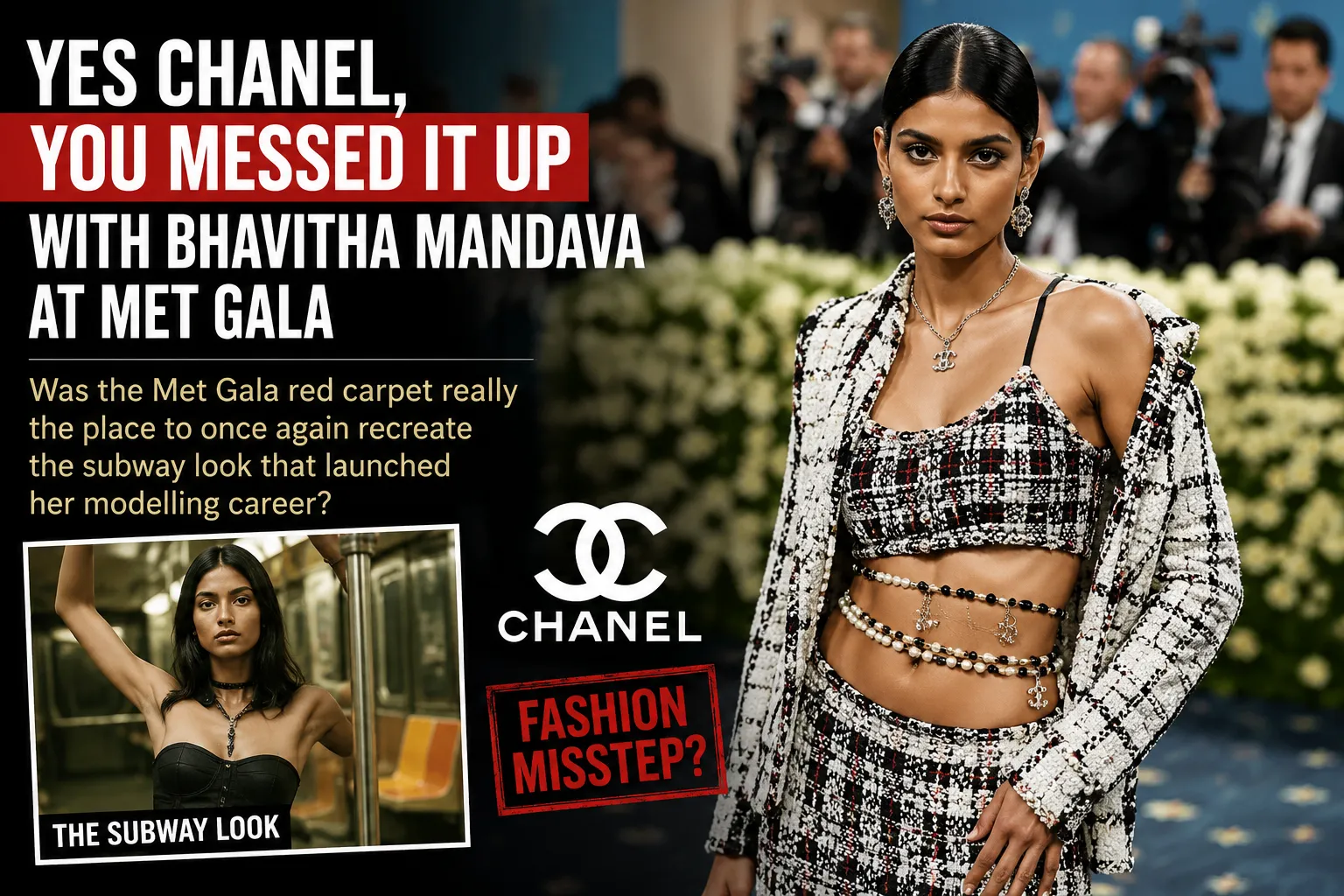
The controversy was not necessarily about the craftsmanship of the outfit itself, but rather about the concept behind it. Critics and fashion observers questioned whether recreating the subway-inspired look that originally helped launch Bhavitha Mandava’s modelling career was appropriate for an event celebrated for innovation and theatrical reinvention.
The discussion quickly expanded beyond one outfit, evolving into a broader conversation about originality, representation, and the responsibilities of luxury fashion brands on global platforms.
The Met Gala: More Than Just Fashion
The Met Gala is not simply another celebrity red carpet. Organized annually in connection with the Costume Institute exhibition at the Metropolitan Museum of Art, the event is considered one of the most influential nights in fashion.
Designers are expected to:
-
Interpret the annual theme creatively
-
Push artistic boundaries
-
Present couture-level storytelling
-
Create memorable visual statements
This expectation makes the Met Gala fundamentally different from film premieres or award ceremonies. Every appearance is evaluated not only on aesthetics but also on conceptual depth and originality.
As a result, audiences and critics alike hold luxury brands to extremely high standards.
Bhavitha Mandava’s Rise in Fashion
Bhavitha Mandava has steadily emerged as a recognizable face in the modelling industry. Her rise gained attention through striking editorial imagery and unconventional fashion moments that differentiated her from many emerging models.
One of the defining visuals associated with her early career was a subway-inspired look that became widely circulated online. The imagery captured urban energy, youthful rebellion, and high-fashion experimentation. It helped establish her unique identity within the competitive fashion landscape.
Because of this strong association, the recreation of that same aesthetic at an event as significant as the Met Gala immediately drew comparisons to her earlier work.
Why the Look Sparked Criticism
The criticism surrounding the Chanel styling was less about execution and more about context.
Fashion enthusiasts argued that the Met Gala should represent evolution rather than repetition. Recreating a look already tied to a model’s career-defining moment felt, to some observers, like a missed opportunity for reinvention.
1. Lack of Originality
The Met Gala is known for transformative fashion moments. Critics felt the styling relied too heavily on nostalgia rather than presenting a fresh creative direction.
2. Missed Creative Potential
Bhavitha Mandava’s presence at such a prestigious event could have been an opportunity to introduce a new fashion narrative. Instead, audiences saw echoes of a previous campaign aesthetic.
3. Disconnect From the Event’s Spirit
Many viewers believed the subway-inspired styling felt visually disconnected from the scale and artistic ambition typically expected at the Met Gala.
4. Over-Reliance on Viral Imagery
The fashion industry increasingly values social-media recognition. Some critics argued the look appeared designed to recreate internet familiarity instead of delivering true couture innovation.
The Pressure on Luxury Fashion Houses
Luxury brands like Chanel operate under enormous pressure during events like the Met Gala. Every appearance contributes to brand image, cultural relevance, and public conversation.
Fashion houses must balance:
-
Brand heritage
-
Celebrity identity
-
Current trends
-
Theme interpretation
-
Social media impact
In Bhavitha Mandava’s case, Chanel’s decision to revisit a recognizable aesthetic may have been intended as a tribute to her journey or personal fashion identity. However, the audience expectation for novelty at the Met Gala made the choice more controversial.This highlights how even globally respected brands can face criticism when audiences perceive a lack of creative risk-taking.
Fashion in the Age of Social Media
The reaction to Bhavitha Mandava’s appearance also reflects how social media has transformed fashion criticism.
In earlier decades, red carpet analysis was largely controlled by magazines and professional critics. Today, millions of viewers instantly evaluate looks across platforms like Instagram, X, and TikTok.
This creates:
-
Faster trend cycles
-
Immediate public scrutiny
-
Viral criticism or praise
-
Greater demand for originality
Fashion moments are now judged not only by industry insiders but also by highly engaged online communities.
The “subway look” debate gained traction precisely because audiences recognized the reference almost instantly.
The Thin Line Between Tribute and Repetition
Fashion often revisits past inspirations. Designers regularly reinterpret archival styles, cultural references, and iconic looks. However, the success of such reinterpretations depends on execution and context.
A tribute works when it adds:
-
A fresh perspective
-
New symbolism
-
Artistic evolution
Repetition, on the other hand, can feel creatively stagnant if it closely mirrors an earlier visual without meaningful transformation.
Critics of the Chanel styling argued that the look leaned too heavily toward repetition rather than reinterpretation.
Bhavitha Mandava’s Position in the Debate
Importantly, much of the criticism has been directed toward the styling and creative direction rather than Bhavitha Mandava herself.
Many fashion observers acknowledged:
-
Her strong runway presence
-
Her ability to carry high-fashion looks confidently
-
Her growing international recognition
In fact, several discussions suggested that Mandava deserved a more ambitious fashion concept that fully utilized her potential on a global platform like the Met Gala.
This distinction matters because models often have limited control over final styling decisions at major fashion events.
The Larger Conversation Around Representation
The debate also touches on the evolving representation of Indian talent in global fashion spaces.
In recent years, Indian celebrities, designers, and models have gained increasing visibility at international events such as the Met Gala. Audiences now expect these appearances to reflect creativity, individuality, and cultural sophistication.
As global attention toward Indian fashion grows, every appearance carries added significance.
This means:
-
Styling choices face greater scrutiny
-
Representation becomes symbolically important
-
Audiences expect innovation and authenticity
Bhavitha Mandava’s appearance became part of this broader discussion about how emerging Indian talent is presented on global platforms.
What Fashion Brands Can Learn
The response to this look offers several lessons for luxury fashion brands:
1. Audiences Value Reinvention
Modern fashion audiences appreciate bold creative evolution more than recycled aesthetics.
2. Viral Recognition Alone Is Not Enough
A familiar visual may attract attention initially, but long-term impact depends on originality.
3. Global Platforms Demand Higher Creative Standards
Events like the Met Gala require concepts that feel unique, intentional, and culturally relevant.
4. Models Deserve Narrative Growth
As talents evolve, their styling should reflect new chapters rather than revisit old ones repeatedly.
The Future of Met Gala Fashion
The controversy surrounding Bhavitha Mandava’s Chanel appearance ultimately reflects the enormous expectations attached to the Met Gala.
Fashion audiences now expect:
-
Innovation
-
Storytelling
-
Artistic ambition
-
Emotional resonance
As fashion becomes increasingly global and digitally driven, brands must adapt to more informed and vocal audiences.
The conversation also demonstrates that fashion criticism today is about more than clothing—it is about creativity, identity, representation, and cultural impact.
Conclusion
Bhavitha Mandava’s Met Gala appearance sparked debate not because it lacked visual appeal, but because it raised questions about originality and creative ambition. By revisiting the subway-inspired aesthetic associated with her modelling breakthrough, Chanel faced criticism for choosing familiarity over reinvention on one of fashion’s biggest stages.
The reaction reflects the evolving expectations surrounding luxury fashion, especially at globally visible events like the Met Gala. Audiences increasingly want more than beautiful clothing—they want storytelling, transformation, and meaningful artistic direction.
For Bhavitha Mandava, the moment still marks an important step in her international fashion journey. At the same time, it serves as a reminder that in today’s fashion world, standing out requires not just style, but the courage to evolve beyond what audiences have already seen before.
iodailynews.com iodailynews.com iodailynews.com iodailynews.com iodailynews.com iodailynews.com iodailynews.com iodailynews.com iodailynews.com iodailynews.com iodailynews.com iodailynews.com iodailynews.com iodailynews.com iodailynews.com iodailynews.com iodailynews.com iodailynews.com iodailynews.com iodailynews.com iodailynews.com iodailynews.com iodailynews.com iodailynews.com iodailynews.com iodailynews.com iodailynews.com iodailynews.com iodailynews.com iodailynews.com iodailynews.com iodailynews.com iodailynews.com iodailynews.com iodailynews.com iodailynews.com iodailynews.com iodailynews.com iodailynews.com iodailynews.com iodailynews.com iodailynews.com iodailynews.com iodailynews.com iodailynews.com iodailynews.com iodailynews.com iodailynews.com iodailynews.com iodailynews.com iodailynews.com iodailynews.com iodailynews.com iodailynews.com iodailynews.com iodailynews.com iodailynews.com iodailynews.com iodailynews.com iodailynews.com iodailynews.com iodailynews.com iodailynews.com iodailynews.com iodailynews.com iodailynews.com iodailynews.com iodailynews.com iodailynews.com iodailynews.com iodailynews.com iodailynews.com iodailynews.com iodailynews.com iodailynews.com iodailynews.com iodailynews.com iodailynews.com iodailynews.com iodailynews.com iodailynews.com iodailynews.com iodailynews.com iodailynews.com iodailynews.com iodailynews.com iodailynews.com iodailynews.com iodailynews.com iodailynews.com iodailynews.com iodailynews.com iodailynews.com iodailynews.com iodailynews.com iodailynews.com iodailynews.com iodailynews.com iodailynews.com iodailynews.com iodailynews.com iodailynews.com iodailynews.com iodailynews.com iodailynews.com iodailynews.com iodailynews.com iodailynews.com iodailynews.com iodailynews.com iodailynews.com iodailynews.com iodailynews.com iodailynews.com iodailynews.com iodailynews.com iodailynews.com iodailynews.com iodailynews.com iodailynews.com iodailynews.com iodailynews.com iodailynews.com iodailynews.com iodailynews.com iodailynews.com iodailynews.com iodailynews.com iodailynews.com iodailynews.com iodailynews.com iodailynews.com iodailynews.com iodailynews.com iodailynews.com iodailynews.com iodailynews.com iodailynews.com iodailynews.com iodailynews.com iodailynews.com iodailynews.com iodailynews.com iodailynews.com iodailynews.com iodailynews.com iodailynews.com iodailynews.com iodailynews.com iodailynews.com iodailynews.com iodailynews.com iodailynews.com iodailynews.com iodailynews.com iodailynews.com iodailynews.com iodailynews.com iodailynews.com iodailynews.com iodailynews.com iodailynews.com iodailynews.com iodailynews.com iodailynews.com iodailynews.com iodailynews.com